
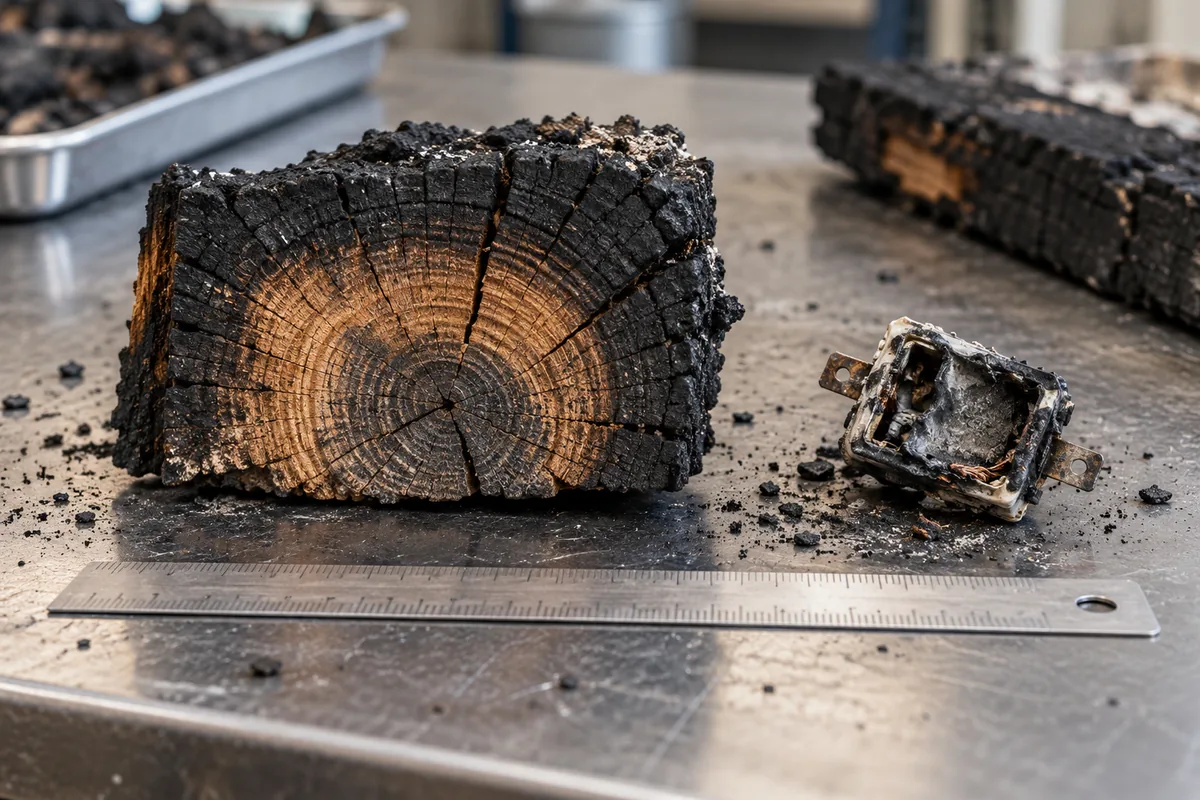
Dismantling, cleaning and restoration after a fire rapidly alter the scene. Preserving materials helps later examination, but access is possible only after permission from the competent services and a safety assessment. Do not take risks for extra photographs.
What to obtain from official records
Gather available incident records, inspection and emergency-service records, diagrams, photographs and information on when the fire was discovered. Note which materials have also been requested. Identify a missing document explicitly rather than replace it with an account of unknown origin.
Documenting changes to the scene
- Overall views of rooms and object locations before dismantling, if such material exists.
- The sequence of firefighting, property movement and emergency works.
- Information on structural dismantling and equipment components removed.
- The electrical installation’s history, repairs and known faults.
- Original camera recordings and other relevant files with their source identified.
Do not label the most heavily burned area as the origin
Damage severity depends on different fire development and firefighting conditions. A single striking photograph does not establish the origin or cause. Testing a hypothesis requires the signs, scene and timing information to be considered together.
Preservation of individual items
Removal, packaging and transfer of potentially significant components must be arranged with specialists and in line with procedural requirements. Do not dismantle hazardous remains, clean traces or mix fragments from different locations yourself. Every transferred item needs its provenance identified.
If property has already been removed, keep inventories, photographs and details of who moved it and when. An item whose discovery location is unknown may have substantially lower evidential value.
Separate causes from consequences
Establishing the technical cause of a fire, examining damaged structures and valuing property are separate fields. Calculating restoration costs does not itself establish the ignition source. In a combined assignment, the boundaries of each examination must be clear.
Before the initial enquiry, prepare a chronology and an inventory of available materials. The specialist will assess what is missing and whether examination remains possible after the scene has changed. The absence of a preserved item must not be concealed by a categorical conclusion based only on a general incident description.